The Louisville Cardinal Alumni Group

Explore the history of The Louisville Cardinal, the Independent Student News Source at UofL

Tag: books

  • Louisville Cardinal Alumni Group Expands Outreach With Facebook Page

    Louisville Cardinal Alumni Group Expands Outreach With Facebook Page

    In an effort to expand outreach to its members, the Louisville Cardinal Alumni Group has branched out into social media by establishing a Facebook page. Located at www.facebook.com/groups/867023753453520, the page is designed to help alumni stay in touch and share their memories.

    “We have several generations of alumni, and they’re located all over the country,” said alum George Taylor, who was The Cardinal’s Editor-in-Chief in 1993-94. “We hope this page will help bring them together and renew old friendships.”

    The Facebook page is also designed to help alumni keep up with news about the ongoing 100th anniversary celebration of The Louisville Cardinal, the University of Louisville’s independent student news source. Facebook was founded in 2004 and has approximately three billion monthly active users worldwide. It is the third-most-visited website in the world and has one of the world’s most downloaded mobile apps.

    The Louisville Cardinal Alumni Group was started in February after several alumni attended a 100th anniversary event for The Cardinal held at UofL and attended the ongoing anniversary exhibit. The group’s website is at https://lcag.site, and you can sign up for their newsletter by emailing lcag94@aol.com.

    The Facebook page was initially created in 2017 by alum Michael Lindenberger, The Cardinal’s Editor-in-Chief in 1995 (Spring) and 1995-96, in response to a financial crisis that threatened the paper’s continued existence. He helped rally support by asking alumni to contribute money for an advertisement that ran in the paper. The ad, signed by dozens of alumni, stressed The Cardinal’s importance to students and the UofL community and urged the University to restore its funding.

    These efforts, along with multiple articles and opinion pieces that ran in The Courier-Journal and elsewhere, convinced UofL to restore enough funding to allow the paper to continue publishing. The Cardinal ceased publishing a print edition in 2020 in the wake of COVID and is now online only at www.louisvillecardinal.com. Lindenberger passed away in 2022.

    “The Facebook page had been inactive since 2020,” Taylor said. “With 2026 being the publication’s 100th anniversary, it seemed like the perfect time to revive it. UofL is planning another anniversary event in the fall, so stay tuned for news and information about that and other upcoming events.”

  • Do Facebook’s Good Points Outweigh Its Bad Ones?

    Do Facebook’s Good Points Outweigh Its Bad Ones?

    Commentary
    By Paul Fultz

    When a friend and colleague told me a group we’re in now has a Facebook page, I couldn’t help being a little skeptical and more than a little sarcastic.

    “We have a Facebook page?” I asked. “Is that a good thing?”

    As it turns out, it is. But it’s not difficult to understand my skepticism: as popular and seemingly omnipresent as Facebook is, it has more than its share of detractors.

    My friend George Taylor and I are part of the Louisville Cardinal Alumni Group, an organization of former University of Louisville students who worked for UofL’s independent student newspaper, The Louisville Cardinal.

    The group’s members have varying opinions about Facebook. Some are avid users, some maintain accounts but don’t use them very often, and some have either never used the platform or are former users who’ve abandoned it completely.

    That’s the reason the group’s primary means of communicating with members is email and our website at https://lcag.site. Unlike a Facebook page, the website doesn’t require you to sign up or provide any personal information, and there’s no chance you’ll run into your 10th grade girlfriend or boyfriend while scrolling through its pages.

    And Facebook can be hazardous to your mental health. One alum recently got back on for the first time in years, using it to reconnect with old friends and exchange phone numbers and email addresses. Two weeks later he deactivated his account again, saying “I was spending too much time scrolling through my feed, and every time I did it was annoying and drove me nuts.”

    Anyone who’s ever used Facebook can relate to that statement, at least a little. I certainly can. In many ways I enjoy it, but I’m well aware of the down side and have spent a great deal of time complaining about it. Why do I dislike Facebook? Let me count the reasons:

    * Everything I’ve ever read about Facebook founder and CEO Mark Zuckerberg indicates he’s a terrible person who would sell the entire human race out if he thought it might earn him an extra dollar. Which makes him no different than most billionaires, but that’s no excuse. Zuckerberg and his fellow tech bros have also spent a lot of time contributing money to and sucking up to America’s least favorite fascist dictator, Donald Trump. That alone is enough to make me want to shun Zuckerberg and everything he touches.

    * And then there’s Artificial Intelligence (AI), which Facebook not only supports, but is determined to shove down everyone’s throats whether we like it or not. Every time I’m on Facebook I’m deluged with ads for AI products. Every time I see one I click on the X to make it go away, and a few minutes later it’s replaced by a new one. Anytime someone tries that hard to make you do something it’s always for their benefit, not yours.

    The arguments against AI are well-documented, but I’ll summarize them briefly: it’s terrible for the environment, it takes away people’s jobs at a time when many are already struggling, and its supported by the same billionaires who are determined to end democracy.

    I understand that many people who use AI have little to no choice in the matter. Many are required to do so by their jobs or their schools, and there’s not a lot they can do about it short of making the unwise decision to become unemployed and/or a dropout. I’ve also heard the argument that “AI is in phones, its in social media, if you use those you support AI!”

    First of all, there wasn’t any AI in cell phones and social media when I started using them, and just because someone came along and put it there later doesn’t mean I’m going to stop using them. I’d prefer to just complain relentlessly until it’s taken back out.

    * There’s a lot of fake news on Facebook, and much of it seems to favor right wingers. Which is no surprise given Zuckerberg’s political leanings. And many of us have experienced instances where we post something criticizing the right, only to have Facebook delete it and/or penalize us for posting it. Facebook’s rules about what one can and cannot post are wildly inconsistent and selectively enforced, to say the least.

    * Even the non-political ads on Facebook are annoying and violate people’s privacy. We’ve all experienced a situation where we click on an ad we’ve never clicked on before and never click on again, but ads for that product then follow us around for weeks or even years. Facebook sells advertisers our personal data, allowing them to track us within inches of our lives to try to sell us crap we don’t need.

    But if Facebook is so terrible, why would I ever use it? Why would anyone? On some days I’m still not sure, but I do remember why I started using it 17 years ago (gasp!) in 2009.

    Once again all credit goes to my friend George, although any blame is entirely my own. George texted me and said something like “So you’ve heard of Facebook, right? I got on a few weeks ago and I’m really enjoying it. It’s a great way to reconnect with old friends, and then you can leave sarcastic comments on their page! I feel like it’s right up your alley.”

    I responded by texting “Thanks for thinking of me, but I would, never, ever, get on Facebook. It’s a total violation of privacy. I’m going to volunteer my personal info so advertisers and everyone who’s ever known me can track my every move? No thank you. Not in this lifetime!”

    A few hours later, I got the following text from a woman I’d dated a few years earlier: “How’s it going? I was scrolling through the contacts in my phone, saw your name and thought I’d see what you’ve been up to. Are you on Facebook? I just got on a few weeks ago and it’s really fun.”

    Ten minutes later I had created a Facebook account, sent out dozens of friend requests, and texted her back: “My friend George was just telling me about Facebook. I just created an account!” Then I texted George: “It seems I owe you a big apology. It’s kind of a funny story . . .”

    And sure enough, once I was on Facebook I found myself enjoying it. While I ran into more than a few people I’d just as soon have forgotten, I also reconnected with a lot of old friends I remain in touch with to this day. And George was right, I loved leaving sarcastic comments on people’s pages. And most of them didn’t even unfriend me!

    It wasn’t all sarcastic comments, though. I also liked engaging in serious political discussions with my Facebook friends, most of whom are highly intelligent and have lots of insightful points. And I used to love arguing with idiots in the comments section who said things like “I’ve done my own research, and scientists are wrong about this” and “I bet you wouldn’t say that to my face. Unless I was working on my Camaro, because everyone knows I wouldn’t stop working on my Camaro just to kick your ass.”

    It took me years to stop arguing with idiots in the comments section. I had long since stopped enjoying it, but I somehow felt compelled to continue trying to make my point. After all, I had logic and reason on my side. And sarcasm! But I finally realized that he who continually argues with idiots risks becoming an idiot. I still have occasional lapses, but for the most part now when someone says a deadly disease is best treated by drinking bleach, I stay quiet and just leave them to it.

    One thing I like about Facebook is it allows you to share news and opinions with others, then receive instant feedback. As a former journalist who long ago left the field (first for pr/marketing, then IT), it scratches my occasional itch to publish something and have someone read it. And what Facebook user hasn’t posted something and then watched with glee as it quickly received dozens or even hundreds of likes? And who hasn’t posted something they thought was pretty clever, then watched with dismay as it got only three likes in 24 hours? Not me, I can tell you that.

    Another great feature is you can join or even create pages to suit your interests, such as the alumni group page I mentioned. You just have to be aware that Facebook can censor or shut your page down at any time for any reason, and those reasons often make no sense.

    I’ve been a member or administrator of several humor pages that were shut down for a series of jokes that were so mild they could have aired on what’s left of network TV. That’s why you have to be sure to make a list of group members and their contact info, so you can recreate the page under a different name if and when Facebook nukes it. Such is life in the digital theocracy that is social media.

    Despite its disadvantages, for me the good parts of Facebook still outweigh the bad. As much as I’m tempted to stop doing business with any giant corporation whose actions and motives could be described as less than pure (all of them, basically), I realize that in order to do that I’d have to leave society and go live in a cave. And when I tried that the WiFi was terrible, so that’s not going to happen again.

    So overall, I’m feeling pretty good about being on Facebook. If nothing else, it’s free and I’m bored. And the alumni page is working out great. Plus I’ve mastered a form of social media that is shunned by both the very young and the very old, which positively delights me. I’m happy to be socializing with other middle aged people, especially since I can do so while still sitting on my couch.

    But just as I was basking in the glow of being a modern person who made the very progressive decision to continue using social media instead of going underground, I got a call from George, who said “So you’ve heard of Instagram, right?”

    They tell me my scream could be heard half a block away. But once I explained to my neighbors why, they said they completely understood and all was forgiven.

  • World Cup Marathon Tests Limits of Columnist’s Endurance

    World Cup Marathon Tests Limits of Columnist’s Endurance

    Commentary
    By Nick Waller

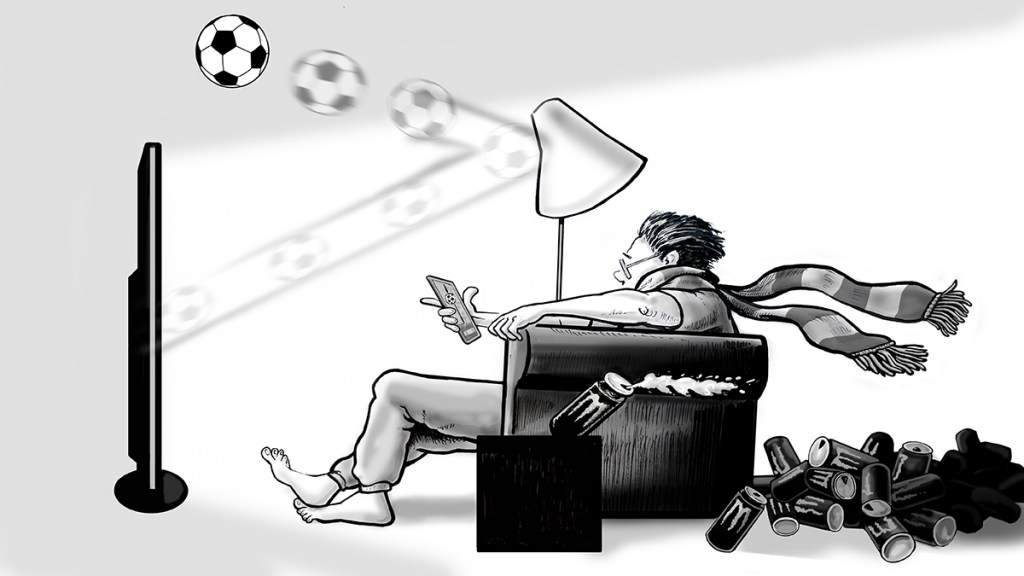
    Being newly early retired and with unlimited goof-off time, I decided to challenge myself to watch all 104 matches of the 2026 World Cup. It took a lot of Monster Energy drinks and coffee to sit through each and every match. My Thornton’s Rewards Card runneth over.

    When there were two matches on at a time, I watched the second game on a computer while “the big game” was on the TV. And now that it’s over and I survived, it all seems like a blur.

    The World Cup is the most viewed, most analyzed, most over-analyzed, most beautiful and most frustrating sporting event on this and perhaps any planet (change my mind.) It has been a must watch event for me since I made fun of a coworker going to the 1998 World Cup in France.

    “Soccer is slow. It’s boring,” I said to my buddy Tad. “Just watch one match,” he replied. I did. Just one. Then another. Then as many as I could. Every four years ever since. The great games hooked me in. But watching the fans, seeing how much it meant to them, brought me back for years.

    The World Cup is a quadriennal tournament which has been around since Uruguay beat Argentina 4-2 in 1930. This year 48 teams from powers like France and Spain, to teams I had never heard of like Cabo Verde, battled in the planet’s biggest sporting event.

    It’s hard to sum up such a prolonged and intense viewing experience. But as Rick Bozich might say, here are a few thoughts written on the back of my game-used Lamine Yamal jersey.

    MEDIA: I am old. I am grumpy. I will be dead soon. I am hypercritical of the media having worked in it since Betamax tapes. I watched the Fox coverage of the World Cup until the United States second match against Australia. It was a group stage match. The US plays three games in group stage, guaranteed. If you play well enough you go to the knockout round. If you lose there you’re out.

    So think of the group stage as the World Cup regular season and the knockout round as lose and go home like the NCAA Tournament. In 2026 the US qualified for the knockout round for the eighth time. Keep in mind any of those matches are higher up the food chain then playing Australia in the group stage.

    So when Fox announcer John Strong, in a bit of an overreach, hinted pre-match this was the biggest match in team history, I could bear their coverage no longer. I decided it was Telemundo time.

    I watched over 80 matches on Telemundo. They spoke at the right times, shut up at the right times and got excited about gameplay at the right times. And I am pretty sure they didn’t say “Brad Pitt among the fans here,” as Fox did during a camera shot of Matt Damon. But I don’t know if Telemundo made the same mistake. Even after many hours of coverage, the only Spanish word I know is Gooooooool!

    CABO VERDE: The smallest team population-wise and second smallest ever, Cabo Verde punched above their weight class every match, making the knockout stage in their first appearance. Vozinha, the team’s 40-year-old goalkeeper, had about fifty thousand Instagram follows before the team’s David and Goliath Group Stage matchup with one of the pre-tournament favorites,, Spain.

    A Spanish goal seemed a foregone conclusion, but it never happened. Cabo nil, 2026 World Cup champs nil. Vozinha, who went from an unknown to worldwide stardom, now has over 29 million Instagram followers.

    SCOTLAND: As one of my favorite teams in the World Cup, Scotland’s flameout in the Group Stage hurt. But any team whose fan base caused bars to run out of beer in every city they visited demand our attention and respect. Well done Tartan Army!

    THE THIRD-PLACE GAME: England versus France. Two of the top four teams in the tournament played in the third-place match. Almost nobody cared. Two teams who were one win away and couldn’t get over the line, now playing in a consolation match, all hope for the big trophy gone. But the goals came early and often in England’s 6-4 win. In basketball terms it was like watching Loyola Marymount put up 160 every night in the late 1980s and early 90s.

    THE FINAL: Spain one, Argentina nil. In what was likely his last World Cup match, 39-year-old Lionel Messi finally looked old. After scoring an impressive 19 goals in the World Cup, the Argentinian team managed no shots and no shots on goal in 90 regulation minutes in the final. They finished with two extra time shot attempts, neither on target.

    Translation: Spain’s goalkeeper did no work that day. The game was marred by a post match fight, fueled by Argentina’s Leandro Paredes who earned a red card for his efforts.

    The next World Cup will be hosted by Spain, Portugal and Morocco. I should be caught up on my sleep by then, and I have plenty of time to learn some Spanish. Downloading the Duolingo app now. See you in 2030!

    Illustration by George Taylor Jr.

  • The (Not So Secret) Origin Of The Louisville Cardinal

    The (Not So Secret) Origin Of The Louisville Cardinal

    Commentary
    By Paul Fultz

    When I first heard that 2026 is the 100th anniversary of The Louisville Cardinal, I thought my memory was playing tricks on me.

    “The Cardinal is 100 years old? Impossible!” I wrote in a social media post, only half-jokingly. “It was only 61 when I started there in 1987 when I was 18, and that was what, 20 years ago? Um, on second thought, never mind.”

    What can I say, math was never my strongest subject. But I did remember an anniversary issue early on in my freshman year, when I was just getting started as a fledgling sports writer on the University of Louisville’s independent student newspaper. Was it the 50th anniversary issue? And if so, how to explain the time discrepancy?

    For just a moment, I let my imagination run wild. As a lifelong fan of science fiction, comic books and old episodes of the Twilight Zone, I began to imagine different scenarios.

    Was there a time warp, perhaps caused by an ex-staffer going back in time to finally meet a missed deadline and not get yelled at by a particularly terrifying editor? Did he cause a radioactive journalist to bite someone, resulting in an outbreak of truth-telling among the student population? Dare I discover The Secret Origin of The Louisville Cardinal?

    Then I took a deep breath and remembered that most if not all of the answers I sought were in the UofL Archives, which has nearly every issue in the paper’s long history in both print and digital form. A little research revealed that while The Cardinal’s origin and history is a bit convoluted, it’s hardly a secret. It’s well-documented and has been at least partially told on several occasions.

    But even though it’s not a secret, the origin and history of The Louisville Cardinal is a rip-roaring tale filled with enough twists and turns, student rebellions, angry administrators, and even occasional bouts of nudity and foul language, to fuel a modern day Hollywood blockbuster. Truth, as they say, is stranger and fiction. Or as I like to say, you can’t make this stuff up.


    The anniversary edition I remembered was published on September 17, 1987 and was the 55th anniversary issue. But wouldn’t that make The Cardinal ninety-four years old now? As it turns out, it depends on how you count.

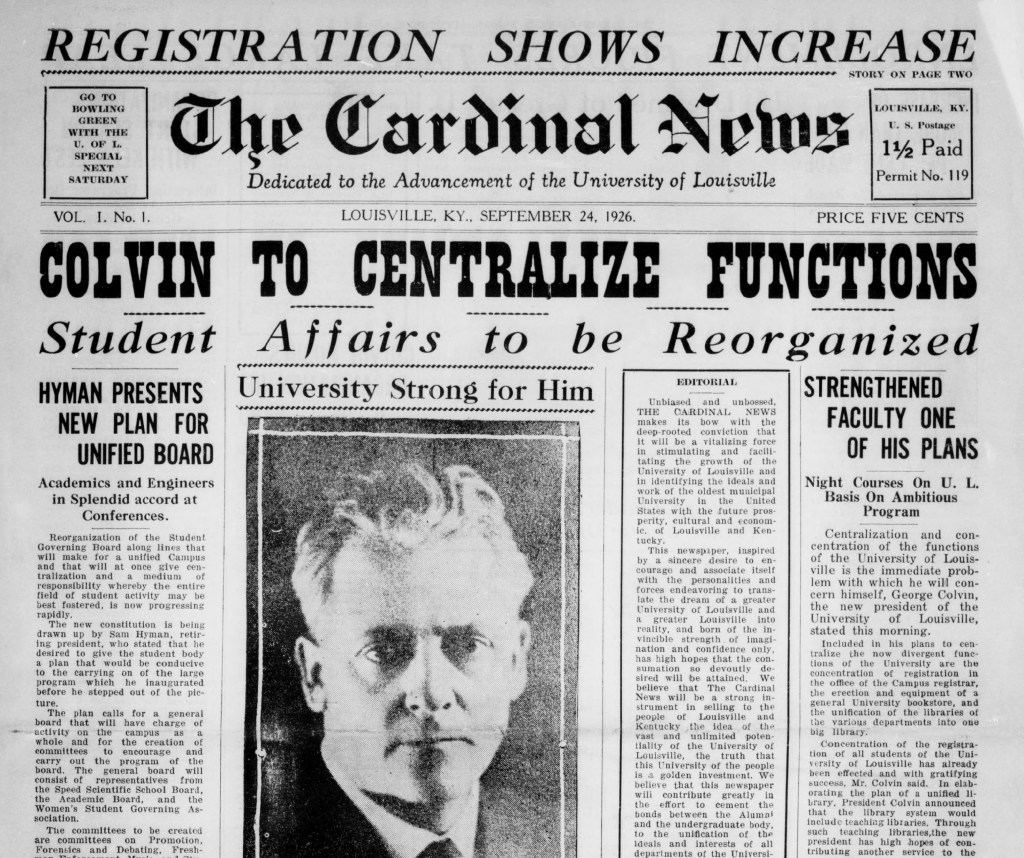
    The first issue of The Cardinal was published on Sept. 16, 1932. It was called The Cardinal then, and the name would not be changed to The Louisville Cardinal until Sept. 23, 1966. But The Cardinal was preceded by The Cardinal News, which was published in 1926-27 from September 24, 1926 until June 3, 1927 when it was discontinued.

    The U. of L. News followed The Cardinal News, with its first issue debuting on Feb. 24, 1928. It was published in 1928-29 and 1929-30 before being discontinued by its editors, who cited a lack of support. Two years passed with no student newspaper until The Cardinal debuted in the fall of 1932-33, and it has been published continuously ever since.

    So yes, for all intents and purposes The Louisville Cardinal is turning 100 in 2026. The first issue of The Cardinal News was UofL’s first independent student newspaper, and the wellspring from which subsequent student news publications sprang.

    Besides, it’s too late to change all the signage. And in six years we may too busy to write this history while fighting off AI with one hand and Mad Max-style pirates trying to steal our water supply with the other.


    The creation of a weekly independent student newspaper at UofL began to take shape in 1922. That’s when UofL student Samuel E. Hymen led a group of UofL students in the formation of a Journalism Club. Their primary intent was to generate interest in creating a journalism chair at the University, but their discussions ultimately lead to the creation of The Cardinal News in 1926. It produced 31 weekly issues until it was discontinued on June 3, I927.

    Right from the start, UofL’s student newspaper found itself at the center of controversy when they covered UofL President George Colvin’s series of disagreements with faculty members who accused him of antisemitism, favoritism, and anti-intellectualism.

    Colvin’s policies lead to the resignation of Louis D. Gottschalk, a UofL history professor who later received recognition at the University of Chicago as a historian of the French Revolution. Editorially, The Cardinal News criticized the President and his supporters.

    They also covered other events that would have a major impact on UofL, including construction bids for the Administration Building, the growing interest of United States Supreme Court Justice Louis D. Brandeis in the University’s School of Law, and the initiation of a UofL endowment campaign.

    A year and a half after The Cardinal News ceased publication, a new student newspaper called The U. of L. News debuted on Feb. 24, 1928. But unlike its predecessor, it was not independent: the new Faculty Committee on Student Publications had the final say regarding its contents.

    The U. of L. News steered clear of the Colvin controversy, but when the President died it criticized “those few hoodlum fools on the faculty” who reportedly “gathered for a celebration upon hearing of the death.” But by the spring of 1930 it had met the same fate as The Cardinal News – discontinued due to lack of support.

    Two years later The Cardinal was established and operated under a Board of Student Publications created by President Raymond A. Kent, which included three faculty members as well as students.

    The early Cardinal was a vigorous student weekly with editorial opinions on local, national, and international issues. In 1936, editor Lewis M. Cohen wrote that during his term he had “tried to arouse a lasting social consciousness.”

    The newspaper was strongly critical of an American Legion investigation of radicalism on campus, and promoted isolationism even after Germany invaded Poland on Sept 1, 1939. In 1940, The Cardinal announced a change in editorial focus from national and international topics to university issues.


    In 1933, the paper started one of its most enduring traditions: offending readers by telling jokes many considered inappropriate.

    The annual Cardinal joke edition became a regular item during the 1930s. On February 10, 1933, the editors announced the upcoming comic issue and encouraged readers not to take offense.

    The special issue appeared the next week, printed in red ink. It contained descriptions of a university as they might have been written by various American authors, including Sinclair Lewis. The paper reported that Lewis would write the sentence “Elmer Gantry surveyed the ugly red brick buildings which raised their drab shapes into a gray, winter sky.”

    The tone of The Cardinal changed gradually during the late ‘50s and early 1960s. In October 1960. some local residents complained to U of L President Philip G. Davidson that a recent Cardinal article had shown a “sick, beatnik sense of humor.”

    One observer was even moved to say that “the printing of restroom wall inscriptions in the campus paper causes me to wonder if perhaps freedom of the press is a mistake.”

    The late ‘60s and early 1970s, a period coinciding with general student rebellion in the United States, brought changes in The Cardinal which shocked many old-line liberals.

    The 1969 April Fool edition of the newspaper caused President Woodrow M. Strickler to suspend publication briefly following the use of what The Courier-Journal called “a couple of poverty-stricken four-letter words.”

    Although the suspension was brief, some believed Strickler had acted too harshly, while others accused the President of showing weakness. A Louisville Times editorial said the University had exercised “grace and good sense” in the matter.

    During the ‘70s, the April Fool issue of the paper continued to be controversial, as in 1977 when the joke edition announced the death of President James Greer Miller.


    The April Fools situation came to a head on April 13, 1979, when The Cardinal, under the direction of editor Tom Murray, released a fictitious issue bearing a three-column photograph of several hundred nude people on its front page. The accompanying cutline read:

    “Still hope: World leaders yesterday grappled with last minute negotiations for the nuclear peace in front of U.N. headquarters in New York. Negotiators spumed offers of clothing explaining that clothes would only irritate their charred flesh.”

    Inside stories included a report of U of L’s entire football team being arrested on drug, sodomy, and subversion charges. Only one ad in the issue had not been altered, which resulted in the total collapse of the paper’s advertising credentials.

    The editorial page was topped with one-and-a-half inch high type spelling out a message described by Michael Wines of The Louisville Times as “a mere two words, one of which describes a sexual act in terms not generally used in tearoom conversation.”

    The issue drew immediate and infuriated response from many members of the University community, particularly football coach Vince Gibson, who remarked “this ain’t no April Fool. Read the calendar. This is April 13.”

    The Student Board of Communications passed a resolution disapproving of the issue and called for a retraction from Murray in the final edition of the year. Murray refused, and along with his managing editor Don Floyd, was promptly removed from his post and replaced by editor-appointee Mark Grundy by Vice President for Student Affairs Edward H. Hammond.

    Grundy produced the final issue, complete with retraction. As a result of the controversy, the Board of Student Publications examined means of relieving the University of legal responsibility for The Cardinal.

    After the incident, Murray said his main goal in publishing the inflammatory edition was to move the paper closer to complete independence, admitting that he was “constantly bucking authority.”

    Murray became so concerned with The Cardinal’s lack of control over the material that went on its pages that he said the rest of the University community viewed his virtually helpless staff as a “bunch of heroin addicts and groupies.”

    By the spring of 1979 Murray’s vision of an independent Cardinal had come to pass. The University relinquished all editorial control and legal responsibility for the paper. A yearly grant from the independent University Foundation replaced direct University funding, and The Louisville Cardinal was incorporated as a separate business entity.

    Grundy and his successors faced the considerable challenge of re-establishing The Cardinal’s credibility, which had disintegrated during the April Fools episode. But it was slowly rebuilt over time, and by the early 1980s the paper was back to full strength.


    In 1981 Donald C. Swain became UofL’s President, a position he held until 1995. Under his leadership, UofL was slowly but surely transformed from a sleepy commuter school into a larger, more modern university with a greater emphasis on research and the external funding it provides.

    The campus, student body, and faculty all expanded during Swain’s tenure, but not without a lot of growing pains. Disputes between Swain and the faculty were common, and The Cardinal faithfully covered each and every one of them, often providing a depth of coverage and a perspective that other local and national publications could not.

    The athletics program also expanded rapidly during the 1980s and 1990s. While the men’s basketball team had long been a powerhouse under coach Denny Crum and won national titles in 1980 and 1986, the hiring of coach Howard Schnellenberger in 1985 thrust the football program into the national spotlight. He never got a national championship, but helped build a stadium and won a New Year’s Day Bowl game at the Fiesta Bowl in 1991.

    The Cardinal documented the athletics program’s accession and also the steady stream of alleged NCAA violations (some eventually proven), investigations, suspensions, punishments, appeals, etc. Those were the days: some college athletes drove really nice cars, and student journalists on The Cardinal tried to memorize or discretely write down their license plate numbers and figure out who had purchased them.

    After Swain retired, John W. Shumaker served as UofL President from 1995-2002. Under his leadership UofL’s endowment grew from $183 million to $500 million, its profile as a research university was enhanced greatly, and renowned coach Rick Pitino was hired to coach the school’s basketball team after Crum was pressured into retiring by athletics director Tom Jurich.

    And The Cardinal was there to cover it all, just as they were there to cover the staggering revelations of Shumaker’s bad behavior that came to light after he left UofL to became President of the University of Tennessee.

    Shumaker’s tenure at Tennessee ended in 2003 when he resigned in the midst of controversy over allegations he had misused university funds and resources. After local media reported that Shumaker had used a university-owned airplane for his personal travel, Tennessee did an internal audit and uncovered several other alleged financial improprieties.

    But the worst part was that Shumaker had used the university airplane to visit Carol Garrison, President of the University of Alabama at Birmingham, with whom he had begun a personal relationship while she was provost at the University of Louisville and the then-married Shumaker was President there.

    The Cardinal reported on the scandal and its aftermath: UofL conducted its own internal audit, resulting in allegations that Shumaker had also misused UofL funds while he was President. His career was in shambles, but no criminal charges were ever filed against him. In 2009, UofL named a building after him. I’m still trying to figure that one out.


    And still The Cardinal soldiered on, into the new millennium. In 2000-01 the paper announced a switch from the standard, broadsheet-sized publication to a smaller, tabloid-sized format. And although the use of color on the front page had become increasingly common in the ‘90s, 2000-01 ushered in an era of more color on the front page and elsewhere in order to increase the paper’s visual appeal.

    In early 2001 The Cardinal went online for the first time, where it still maintains a robust presence at www.louisvillecardinal.com

    From 2015 to 2017, The Cardinal played a vital role in covering one of the most turbulent and scandal-plagued periods in UofL’s history. President James Ramsey was accused of embezzlement and ultimately resigned under pressure.

    Coach Rick Pitino and athletics director Tom Jurich were both fired after revelations that escorts were being paid to have sex with basketball players and potential recruits. The Cardinal’s work and the efforts of the many other media outlets who covered the stories were instrumental in helping UofL clean house and move out of this troubled period.

    In 2017, The Cardinal once again experienced financial troubles, troubles so severe that The Courier-Journal ran a story headlined “The University of Louisville pulls funding from student newspaper. Could this mean the end?”

    Because of budgetary shortfalls that were at least partially the result of ex-President Ramsey’s financial mismanagement, UofL announced it was pulling its financial support for the student newspaper.

    The Cardinal’s budget was approximately $146,000 a year, and in prior years the University had helped support the paper by purchasing $60,000 of advertising annually. In 2016 UofL reduced that amount to $40,000, and in 2017 they announced that by 2018 it would be reduced to zero.

    The community and The Cardinal’s alumni rallied around the paper, in the form of opinion pieces in the CJ and elsewhere, and through a Facebook page created to provide financial and moral support.

    Those efforts were successful and The Cardinal was able to retain enough financial support from UofL to carry on publishing, continuing to provide the University community with outstanding reporting and an invaluable student perspective.

    A combination of the paper’s ongoing financial struggles and the sudden onset of the COVID-19 pandemic in January 2020 resulted in a decision to make The Cardinal online only going forward. And given the fact that more and more news in the modern era is increasingly online only, the decision to stop publishing a print edition was likely both wise and inevitable.

    Despite plenty of fits and starts along the way, The Louisville Cardinal has survived and prospered for a century and is well-poised to continue doing so for many years. The publication gives a voice to students, helps create a sense of community on campus, and is a tremendous training ground for young journalists.

    So here’s to The Cardinal, and to the hope that another generation of journalists will one day delve into the archives and write the publication’s history for its bicentennial edition. Unless someone decides to do another April Fools issue between now and then. If that happens, all bets are off.

    Photo: The front page of the April Fools Day issue of The Louisville Cardinal, published on April 13, 1979. Why yes, those are naked people. Click here to see the entire front page.

    Sources: The sources for the information in this commentary are the history of The Louisville Cardinal published in its Sept. 17, 1987 issue, various news articles, and the writer’s own research into back issues found in the UofL Archives.

    The history published in The Cardinal in 1987 was particularly helpful, and large parts of it are excerpted here. Some of it has been lightly rewritten for condensation and clarity, and other parts have been reproduced verbatim, including most of the portion concerning the April Fools issues and the April 13, 1979 April Fools edition and its aftermath.

    My thanks go out to the writers and editors of that history: Mark Clark, Kenneth Hardin, and Gregory Harris. Thanks also to Mariann Kurtz and Janice Theriot, who conceived and designed the anniversary issue and were instrumental in its creation.

    Additional credits from the 1987 anniversary issue:
    * Thanks go to the staff of the University Archives and Photo Archives for their encouragement and patient cooperation.
    * Adapted from “The Cardinal: A Record of Student Life” (1980) by Dwayne Cox, associate university archivist, and “Will the Real April Fool Please Stand Up” (1981) by Dawn Yankeelov, Cardinal managing editor in 1980-81 and editor in 1981-82.


    To read the original article from the 1987 anniversary issue, go to
    “The History Of The Louisville Cardinal: The First Six Decades”

    To view the original article and a selection of key issues, go to
    “Photo Gallery: The Louisville Cardinal Throughout The Years”

  • The History Of The Louisville Cardinal: The First Six Decades

    The History Of The Louisville Cardinal: The First Six Decades

    Written and edited by Mark Clark, Kenneth Hardin, and Gregory Harris, with assistance from Mariann Kurtz and Janice Theriot.

    This article first appeared in the September 17, 1987 issue of The Louisville Cardinal.

    The Louisville Cardinal’s origins inevitably trace back to the dedication and vision of Samuel E. Hymen, who began working toward an independently-minded student publication at the University of Louisville ten years before The Cardinal first appeared in 1932.

    Groundwork for the creation of a student weekly was laid in I922 when a group of U of L students, lead by Hymen, established a Journalism Club.

    Although the primary intent of the organization was to generate interest in creating a journalism chair at the University, the group’s debates and discussions solidified many of the professional and ethical convictions which would become the very soul of future publications.

    Hymen was instrumental in the creation of The Cardinal’s earliest predecessor, The Cardinal News, which made its first appearance in the fall of I926.

    Operated in conjunction with the Journalism Club, The Cardinal News produced 31 weekly issues until it was discontinued on June 3, I927. Students staffed and edited the paper, which sold for five cents and supported itself through advertising sales.

    In an editorial on the Sept. 24, 1926 premiere issue’s front page, editor and general manager Hymen declared the ambitious mission of the fledgling publication.

    “Unbiased and unbossed, The Cardinal News makes its bow with the deep-rooted conviction that it will be a vitalizing force in stimulating and facilitating the growth of the University of Louisville and in identifying the ideas and work of the oldest municipal university in the United States with the future prosperity, cultural and economic, of Louisville and Kentucky … And so. we dedicate this weekly newspaper to freedom, a greater U of L, a greater Louisville and Kentucky.”

    Topics reported by Hymen and his staff varied widely. Articles addressed national and international issues as well as the emergence of U of L football under Coach Tom King and star player Fred C. Koster and theatrical productions produced by drama coach Boyd Martin.

    Perhaps the most controversial news item which occurred during the brief existence of The Cardinal News was the coverage of the stormy administration of U of L President George Colvin, who served from 1926 until his death in office in 1928.

    Colvin’s policies lead to the resignation of Louis D. Gottschalk, a U of L history professor who later received recognition at the University of Chicago as a historian of the French Revolution.

    Gottschalk’s departure highlighted a series of disagreements between President Colvin and many faculty members, some of whom accused the President of antisemitism, favoritism, and anti-intellectualism. Hymen and his staff faithfully covered these episodes. Editorially, The Cardinal News criticized Colvin and his backers.

    Other events covered by The Cardinal News which would have enduring impact on the University community included construction bids for the Administration Building, the growing interest of United States Supreme Court Justice Louis D. Brandeis in the University’s School of Law, and the initiation of a U of L endowment campaign.

    The U of L News followed The Cardinal News with its first issue on Feb. 24, 1928. The new Faculty Committee on Student Publications exercised final control over the student paper, which was distributed free, but lacked the independence of Hymen’s earlier creation.

    In the first issue, editor William Ray acknowledged the cooperation of President Colvin in establishing The U of L News, but also expressed appreciation for the “advice, aid, and material assistance of Samuel E. Hymen, who had been sincere and honest in his convictions.”

    The U of L News steered clear of the Colvin controversy, but when the President died it criticized “those few hoodlum fools on the faculty” who reportedly “gathered for a celebration upon hearing of the death.”

    In May, 1929, the editors complained that they had not received the amount of support hoped for: the paper was discontinued in 1930.

    The present Cardinal first appeared in 1932 and has ran continuously since that time. The new paper operated under a Board of Student Publications, created by President Raymond A. Kent, which originally included three faculty members and the editor and business manager of each student publication.

    Although The Cardinal was distributed free of charge, it was financially solvent through advertising sales, at least for the first several years.

    In 1934, the editors even suggested turning over their excess funds to The Thoroughbred, the ailing University yearbook. In 1936, the senior issue of The Cardinal replaced the annual, which missed several years of publication during the 1930s and World War II.

    Forbidding members to advertise in school publications, the Louisville Retail Merchants Association hurt The Cardinal during the ‘30s, but the newspaper, unlike the yearbook, managed to continue without interruption.

    From the beginning, The Cardinal reflected student opinions, although it may or may not have been representative. In 1932, for example, the paper became involved in a controversy surrounding football at the University.

    Several letters to the editor signed “Agnes” criticized those who argued for a good football program to promote the school, but a reply called the anonymous writer “a lightweight from the neck up.”

    In December 1932, the Cardinal announced new rules for fraternity and sorority dances, posted by Dean Hilda Threlkeld. Not only did the rules limit the number of unaccompanied men at each gathering (four to each woman), but also said “drunkenness or disorderly conduct” were “forbidden at future dances.”

    The annual Cardinal joke edition became a regular item during the ‘30s. On February 10, 1933, the editors announced the upcoming comic issue and encouraged readers not to take offense.

    The special issue appeared the next week, printed in red ink. It contained descriptions of a university as they might have been written by various American authors, including Sinclair Lewis. The paper reported that Lewis would write the sentence “Elmer Gantry surveyed the ugly red brick buildings which raised their drab shapes into a gray, winter sky.”

    Later, the Louisville Herald-Post ran an editorial criticizing flashy student publications, but did not mention The Cardinal by name.

    The early Cardinal was a vigorous student weekly with editorial opinions on local, national, and international issues. In 1936, editor Lewis M. Cohen wrote that during his term he had “tried to arouse a lasting social consciousness.”

    The newspaper was strongly critical of an American Legion investigation of radicalism on campus, promoted isolationism, and argued against preparedness during the ’30s.

    In 1937 U of L President Raymond A. Kent censored the paper due to what he called factual inaccuracies in a story. In his 1936-37 annual report, Kent said he only demanded that the paper tell the truth and keep the proper decorum, and that censorship had resulted because he believed the first principle had been violated.

    Generally, President Kent defended the right of The Cardinal to take unpopular positions on controversial issues. The Cardinal held to its isolationist posture even after Germany invaded Poland on Sept 1, 1939. On May 31, 1940, the University’s Board of Trustees held a special meeting to discuss the morning s issue of The Cardinal, which claimed that an “Anglo-French Fifth Column (had) invaded Louisville.”

    The paper charged that this group sought to aid the mother country, Britain, just as the National Socialists in Germany supported the Fatherland. In November, 1940, The Cardinal announced a change in editorial focus from national and international topics to university issues. By 1944, the paper had become a vigorous supporter of war loans. It also advocated an anti-poll tax bill and “many concrete ideas for post-war planning.”

    Society was somewhat more placid following the war, but The Cardinal remained active in a variety of issues.

    When the Louisville Municipal College, a black liberal arts school affiliated with U of L, closed and blacks were admitted to the University in 1950-51, The Cardinal decried the problems of operating an integrated university in a segregated city. Black students, for example, could not be admitted to swimming classes that met at the local YMCA.

    However, the paper was less vocal during the early ‘50s than it had been during the ‘30s. A series of articles in 1952 reported on local watering holes such as Sherman’s Tavern, where “the favorite college order” was “the ten-cent local draft.”

    The tone of The Cardinal changed gradually during the late ‘50s and early 1960s. In October 1960. some local residents complained to U of L President Philip G. Davidson that a recent Cardinal article had shown a “sick, beatnik sense of humor.”

    One observer was even moved to say that “the printing of restroom wall inscriptions in the campus paper causes me to wonder if perhaps freedom of the press is a mistake.”

    The late ‘60s and early 1970s, a period coinciding with general student rebellion in the United States, brought changes in The Cardinal which shocked many old-line liberals.

    The 1969 April Fool edition of the newspaper caused President Woodrow M. Strickler to suspend publication briefly following the use of what The Courier-Journal called “a couple of poverty-stricken four-letter words.”

    Although the suspension was brief, some believed Strickler had acted too harshly, while others accused the President of showing weakness. A Louisville Times editorial said the University had exercised “grace and good sense” in the matter.

    During the ‘70s, the April Fool issue of the paper continued to be controversial, as in 1977 when the joke edition announced the death of President James Greer Miller.

    The April Fools situation came to a head on April 13, 1979, when The Cardinal, under the direction of editor Tom Murray, released a fictitious issue bearing a three-column photograph of several hundred nude people on its front page. The accompanying cutline read:

    “Still hope: World leaders yesterday grappled with last minute negotiations for the nuclear peace in front of U.N. headquarters in New York. Negotiators spumed offers of clothing explaining that clothes would only irritate their charred flesh.”

    Inside stories included a report of U of L’s entire football team being arrested on drug, sodomy, and subversion charges. Only one ad in the issue had not been altered, which resulted in the total collapse of the paper’s advertising credentials.

    The editorial page was topped with one-and-a-half inch high type spelling out a message described by Michael Wines of The Louisville Times as “a mere two words, one of which describes a sexual act in terms not generally used in tearoom conversation.”

    The issue drew immediate and infuriated response from many members of the University community, particularly football coach Vince Gibson, who remarked “this ain’t no April Fool. Read the calendar. This is April 13.”

    Gibson retained local attorney Frank Haddad and swore to sue The Cardinal for defamation of character, but the lawsuit never materialized.

    The Student Board of Communications passed a resolution disapproving of the issue and called for a retraction from Murray in the final edition of the year.

    Murray refused, and along with his managing editor Don Floyd, was promptly removed from his post and replaced by editor-appointee Mark Grundy by Vice President for Student Affairs Edward H. Hammond.

    Grundy produced the final issue, complete with retraction, but the incident was far from over. Murray and Floyd sued the University to be reinstated to their posts, claiming their first amendment rights had been violated. Defendants were listed as the U of L Board of Trustees, President James G. Miller, and Hammond.

    During the proceedings, Murray referred to Hammond, with whom he had experienced no previous conflicts, as “one who doesn’t care if you live or die; he just wants to get the job done.”

    On May 7, U. S. District Court Judge Thomas A. Ballantine ruled that Murray’s and Floyd’s rights had been violated, but since their terms as editors had already expired, he deemed their suit mute. By May 15, Ballantine had dismissed the case entirely.

    In retrospect. Murray said the issue “never looked the way I wanted it to.”

    As a result of the controversy, the Board of Student Publications examined means of relieving the University of legal responsibility for The Cardinal.

    After the incident, Murray said his main goal in publishing the inflammatory edition was to move the paper closer to complete independence, admitting that he was “constantly bucking authority.”

    Murray was particularly incensed by the actions of Student Government Association representatives on the student publications board. At the time of the conflict, the committee consisted of the editors of the four existing student media groups and six SGA delegates, who Murray claimed would censor many criticisms of student government before they could be printed in The Cardinal.

    Murray became so concerned with The Cardinal’s lack of control over the material that went on its pages that he said the rest of the University community viewed his virtually helpless staff as a “bunch of heroin addicts and groupies.”

    By the spring of 1979 Murray’s vision of an independent Cardinal had come to pass. The University relinquished all editorial control and legal responsibility for the paper. A yearly grant from the independent University Foundation replaced direct University funding, and The Louisville Cardinal was incorporated as a separate business entity.

    Grundy and his successors faced the considerable challenge of re-establishing The Cardinal’s credibility, which had disintegrated during the April Fools episode. Grundy, who accepted the paper’s new independence despite opposing it initially, suspended publication of any joke issues. The last, and a much tamer, April Fools edition appeared on April 3, 1981, during the term of editor Gil Lawson.

    The first standardized version of The Cardinal’s policies as an independent entity was established by 1982-83 editor Paul A. Long. Facets of the policies included an absolute separation of The Cardinal’s business and news departments and a clarification of the paper’s relationship with SGA.

    Financial difficulties beset the paper during the term of Long’s successor, Jack Barry, leaving 1984-85 editor Larry Croom confronted with a serious budget deficit. Croom and the advertising staff responded to the crisis, and the paper finished the year in the black.

    In the fall of 1985, editor T. L. Stanley created The Cardinal’s first policy and style manual, using policies created by Long as a foundation.

    Throughout the years, The Cardinal has remained at least a partial barometer of student opinion. Its pages contain a record of student life at U of L not found elsewhere.

    Other student publications, and even student newspapers have appeared at the University from time to time, but The Cardinal and its forerunners, The Cardinal News and The U of L News, have appeared more often and provided more depth than any of their rivals.

    Since students create fewer historical records than faculty or staff members, student life is one of the most difficult aspects of a university’s history to document. Although The Cardinal is an incomplete record, without this 55 year-old diary of activities and opinions, the history of the University of Louisville would be much less complete.

    Adapted from “The Cardinal: A Record of Student Life” (1980) by Dwayne Cox, associate university archivist, and “Will the Real April Fool Please Stand Up” (1981) by Dawn Yankeelov, Cardinal managing editor in 1980-81 and editor in 1981-82.

    Thanks go to the staff of the University Archives and Photo Archives for their encouragement and patient cooperation.

    To view the original article and more, go to
    “Photo Gallery: The Louisville Cardinal Throughout The Years”

  • Raiders of the Lost House Ads

    Raiders of the Lost House Ads

    Commentary
    By Paul Fultz

    Today most news sources are online only. A few still publish print editions as well, but in 2026 news is primarily on screen instead of on paper. Both methods have their advantages and disadvantages, but one great thing about publishing online is you never have to worry about filling space, or running out of it.

    Not so with print journalism: you have pages to fill, one way or another. If a story is too long and doesn’t fit you cut it. If it’s too short it leaves a hole that has to be filled, often with a house ad. Paid advertisements are produced by whoever’s footing the bill, but house ads are unpaid and produced “in house” by the publication.

    There are many different types of house ads. But in the late ‘80s and early ‘90s when I worked for The Louisville Cardinal, the University of Louisville’s independent student news source, they were usually a cry for help. Literally and figuratively.

    At that time you probably needed about two dozen staff members to publish a weekly issue and still have time for fun activities like studying, attending classes, working one or more part-time jobs, and sleeping. At any given moment we probably averaged 12-15 staffers. Thus the constant search for more help, and the barrage of house ads begging and pleading for it.

    But it wasn’t all bad, of course, in fact for the most part it was great. We worked long, hard hours, but we were proud of the results and had a lot of fun while we were doing it. Some would say too much fun.

    You’d never know it by reading the house ads, though. They were an endless procession of bitching, whining and complaining about our plight and how we needed someone, anyone, to come forth and lighten our workload. Some of this exaggeration was done for comedic effect, and the rest was likely out of frustration and lack of sleep after one too many hours spent staring at a screen that still wasn’t full.

    But a lot of house ads weren’t done at the last minute, or strictly to fill space. They were planned in advance to placate beleagured section editors who went around saying things like “If I don’t get some more help, I’m going to lose my mind!”

    The question is, were these help wanted ads effective? Did people respond to them and end up working for the paper? The answer is yes, although it’s difficult to say how many. Probably half the staff sought us out on their own, while the other half started by responding to an ad. And since we were always short-handed, the people we recruited were crucial.

    The house ads also took plenty of digs at UofL for not having a journalism program, proclaiming The Cardinal as a great place to get the training that the University either couldn’t or wouldn’t provide. Those were different times, and in those days the relationship between The Cardinal and the UofL Communication department could be described as shaky at best, despite the fact that many staffers were Communication majors.

    I was one of those Communication majors and actually managed to graduate in five years despite my casual approach to class attendance and my general avoidance of Strickler Hall, where the department’s offices and classrooms were located.

    One day I ran into one of my professors on campus, and he said “How would The Cardinal know if UofL has a journalism program? I haven’t seen any of you in Strickler since last fall, maybe we started one you don’t know about!” Touché, professor whose name I’ve long since forgotten, touché.

    But not all house ads were of the help wanted variety. Some encouraged the love lorn to take out ads in our personals section. Some extolled the virtues of upcoming or ongoing features. Some encouraged potential paid advertisers to inquire about our low, low rates.

    But all were done with tongue firmly in cheek, as a way of letting off steam and introducing a bit of whimsy into what was otherwise a very serious endeavor. Staffers were proud of the work we did, and we knew that all the jokes in the world about our personal struggles were insignificant in the face of the only thing that really mattered: what ended up in print every Thursday.

    Still though, it was nice to let a little of our personalities peek out from around the edges. Because there, under the news stories and all the paid advertisements for movies and beer and God knows what else, was a tiny glimpse at what it was like to actually work for the paper. And if nothing else, we always said it prevented potential applicants and new staffers from saying they hadn’t been warned.

    Click to view “Photo Gallery: Raiders of the Lost House Ads”

    Want to see more house ads? Click to view “Photo Gallery: Even More House Ads”

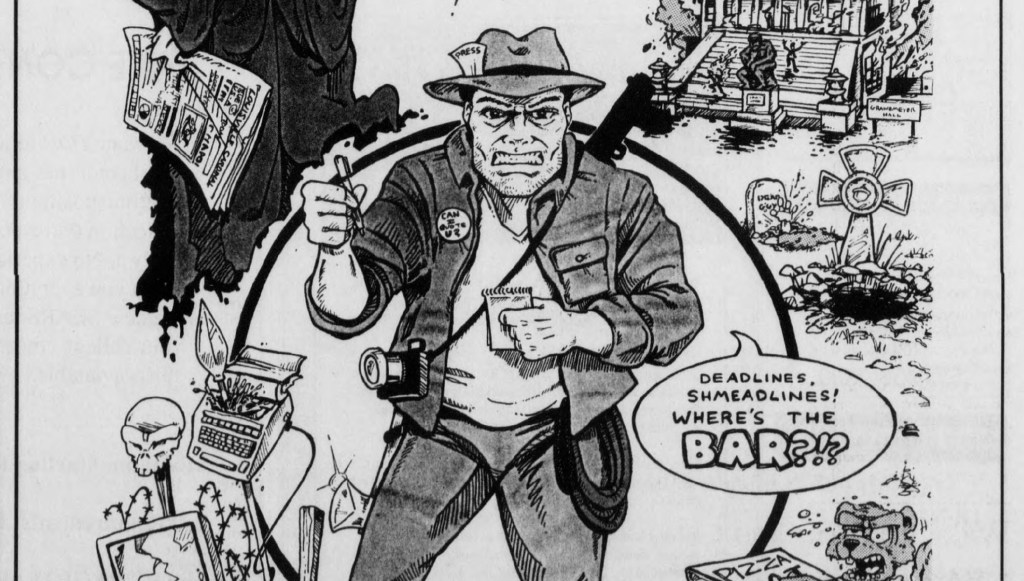
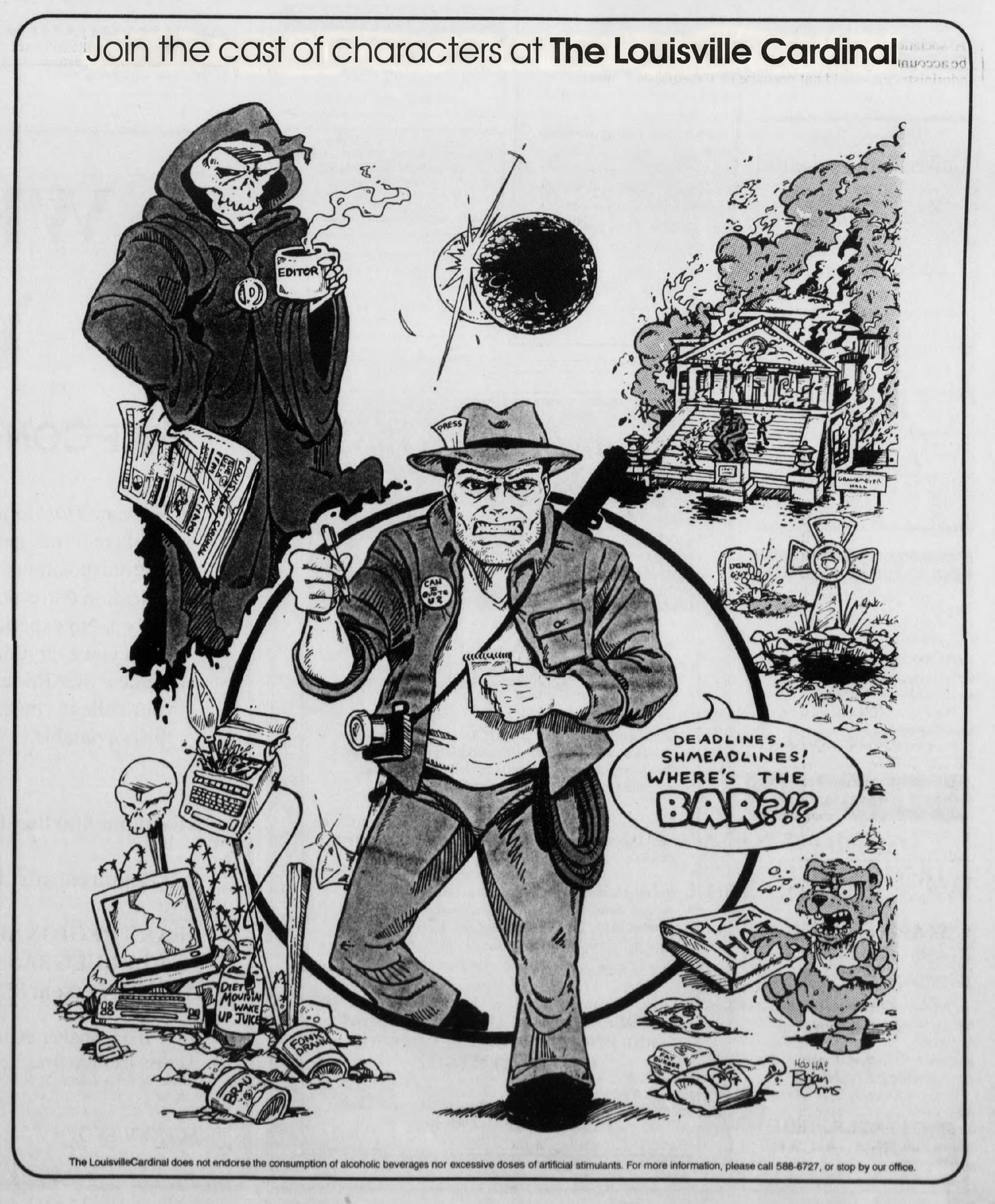
    Illustration: Self-caricature by Brian Orms in a parody of the movie Raiders of the Lost Ark. Click here for the full image. This illustration originally appeared on page 15 of the October 14, 1993 issue of The Louisville Cardinal.

    The text at the bottom says “The Louisville Cardinal does not endorse the consumption of alcoholic beverages nor excessive doses of artificial stimulants. For more information, please call 588-6727, or stop by our office.”

  • Flashback to 2016 and 2017: Scandals plague UofL as Rick Pitino is fired, President Ramsey resigns

    Flashback to 2016 and 2017: Scandals plague UofL as Rick Pitino is fired, President Ramsey resigns

    Last week we congratulated alum Kyeland Jackson for winning a Pulitzer Prize, journalism’s highest honor. Jackson and the staff of The Minnesota Star Tribune won a newsroom-wide Pulitzer Prize for Breaking News Reporting.

    Jackson worked at The Louisville Cardinal, the University of Louisville’s independent student news source, during one of the most turbulent and scandal-plagued periods in UofL’s history.

    President James Ramsey was accused of embezzlement and ultimately resigned under pressure. Coach Rick Pitino and Athletic Director Tom Jurich were both fired after revelations that escorts were being paid to have sex with basketball players and potential recruits.

    As Editor-in-Chief in 2016-17 and in Fall 2017, Jackson not only oversaw the paper’s coverage of these scandals but also wrote most of the articles about them. His work and the efforts of the many other media outlets who covered the stories were instrumental in helping UofL clean house and move out of this troubled period.

    So take a trip down memory lane and check out some of the best and most significant articles this Pulitzer Prize-winning journalist wrote during his time with The Cardinal:

    * NCAA: Pitino did not adequately monitor Andre McGee
    Published March 23, 2017

    * U of L meets NCAA, expects decision and possible punishment within months
    Published April 20, 2017

    * University starts process of firing Rick Pitino
    Published Oct. 2, 2017

    * U of L fires Tom Jurich
    Published Oct. 18, 2017

    * Postel: Jurich bullied senior leadership, damaged U of L
    Published Oct. 24, 2017

    * Board OK’s Ramsey’s resignation
    Published July 28, 2016

    * How James Ramsey fell from grace
    Published Aug. 22, 2016

    * Benz insists Ramsey and foundation chair must go
    Published Sept. 13, 2016

    * U of L’s Foundation board shaken
    Published Sept. 16, 2016

    * Foundation trumpets reforms to potential donors
    Published Oct. 6, 2017

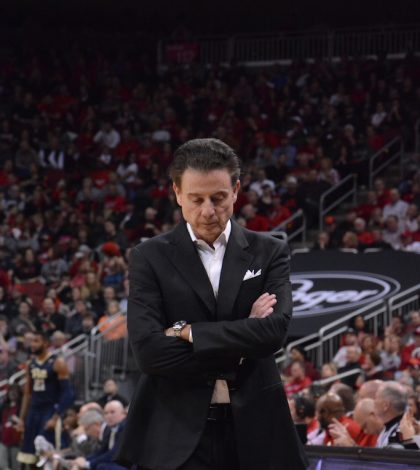
    Photo: Former UofL men’s basketball coach Rick Pitino. Photo courtesy of The Louisville Cardinal. Originally published on March 23, 2017 in The Louisville Cardinal.

  • Cardinal alum wins Pulitzer Prize, journalism’s highest honor

    Cardinal alum wins Pulitzer Prize, journalism’s highest honor

    Congratulations to alum Kyeland Jackson for winning a Pulitzer Prize, journalism’s highest honor.

    Jackson and the staff of The Minnesota Star Tribune won a newsroom-wide Pulitzer Prize for Breaking News Reporting. The team of reporters were recognized for their extensive coverage of a shooting at a back-to-school Mass at a Catholic school that left two children dead and 28 wounded.

    The Pulitzer Prize Board called the coverage “powerful stories marked by thoroughness and compassion.” The winners were announced May 4 at Columbia University.

    Jackson worked at The Louisville Cardinal, the University of Louisville’s independent student news source, from 2015 to 2017. He was Editor-in-Chief in 2016-17 and in Fall 2017. He joined The Minnesota Star Tribune in 2022.

    For more details, see the article in The Louisville Cardinal:
    https://www.louisvillecardinal.com/2026/05/former-cardinal-editor-in-chief-wins-pulitzer-prize/

    For additional information, go to:
    https://www.poynter.org/business-work/2026/star-tribune-pulitzer-church-shooting-breaking-news-reporting/

    To read the winning work from The Minnesota Star Tribune, go to:
    https://www.pulitzer.org/winners/staff-minnesota-star-tribune

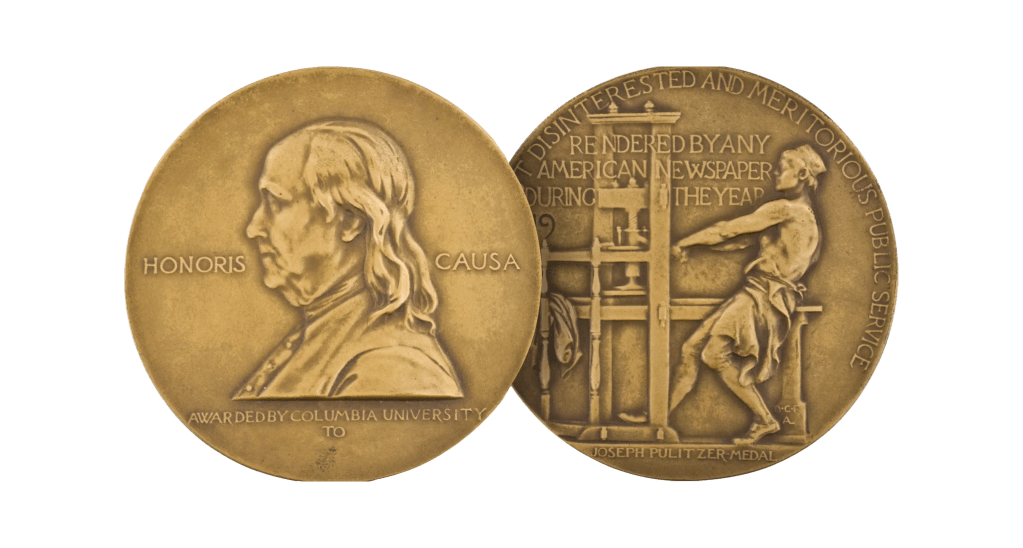
    Photo: The Pulitzer Prize gold medal. The medal is awarded each year to the American news organization that wins the Public Service category. Winners in other categories such as Breaking News Reporting receive a certificate and $15,000. However, over the years the medal has come to symbolize the entire Pulitzer program. Source: https://www.pulitzer.org/page/medal

  • The new and improved Louisville Cardinal Alumni List

    The new and improved Louisville Cardinal Alumni List

    By Paul Fultz
    When the University of Louisville held its celebration of the 100th anniversary of The Louisville Cardinal on Feb. 27, the possibility of another such event in the fall was mentioned. Someone from UofL’s Alumni & Development office said they’d love to invite more of the paper’s alumni “if only there were some sort of alumni list.”

    Ask and you shall receive: several alumni decided on the spot to form The Louisville Cardinal Alumni Group to create such a list and a community of ex-staffers. We’re here, and we’re excited about the opportunity to participate in future events and help publicize them.

    We released The Louisville Cardinal Alumni List a few weeks ago, but that version is chronological and can be a bit difficult to navigate if you’re just looking for an alphabetized list to scroll through quickly. The new and improved list covers the period from 1982-1983 to 1996-97 and also includes information about when someone worked for The Cardinal and what roles they played.

    So take a stroll down memory lane and peruse the list. You’re sure to see names you haven’t thought about in years or even decades. We hope there’s no mistakes or omissions, but if find any be sure and let us know. To view the list, go to https://lcag.site/alumni-list

    If you’re an alum and have memories and/or photos of your time at The Cardinal, we want to hear about it! To find out more, go to:
    https://lcag.site/2026/04/14/memories/

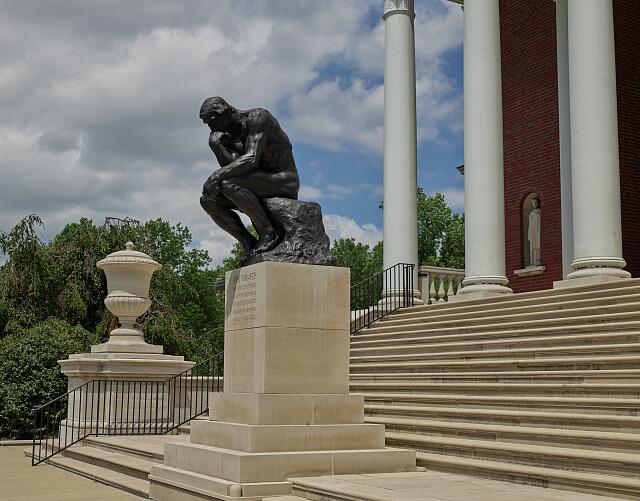
    Photo: The Thinker, a bronze casting of a sculpture by Auguste Rodin, sits in front of UofL’s Grawemeyer Hall. He’s rumoured to be thinking about the large number of student journalists who worked for The Cardinal in its long history. This could take a while.

    Photo courtesy of the Library of Congress:
    https://www.loc.gov/pictures/item/2020722174/

  • RIP Browning Nagle, the quarterback who led UofL football to 1991 Fiesta Bowl victory

    RIP Browning Nagle, the quarterback who led UofL football to 1991 Fiesta Bowl victory

    By Paul Fultz

    Browning Nagle, the quarterback who led the University of Louisville football team to one of its greatest victories ever in the 1991 Fiesta Bowl, has died. Nagle passed away in Louisville on April 10, 2026, at the age of 57, from colon cancer.

    After coach Howard Schnellenberger kicked off UofL football’s rise to prominence in the 1980s, Nagle helped him take it to the next level. He led the Cardinals to a 10-1-1 record in 1990 and propelled them to 14th in the final Associated Press poll, the school’s highest ever appearance at the time.

    His crowning moment came in the 34-7 walloping of Alabama, where he was named offensive MVP after throwing for a Fiesta Bowl record 451 yards and three touchdowns, completing 20 of 33 passes.

    UofL went into the game at Sun Devil Stadium in Tempe, Arizona as nine point underdogs but stunned perennial powerhouse Alabama and football fans everywhere with a runaway victory. It was UofL’s second-ever New Year’s Day bowl game, after their win in the 1958 Sun Bowl.

    “We are saddened by the passing of Browning Nagle, former Fiesta Bowl MVP quarterback and Louisville great,” the Louisville football program said in a social media post on X. “His leadership on the field and passion for the game left a lasting mark on our program. Our thoughts are with his loved ones and teammates during this difficult time.”

    “Our thoughts and prayers are with #7 Browning Nagle, his wife Michelle, and his entire family today,” said UofL Coach Jeff Brohm in a post on X. “A true Cardinal great! We will all miss him very much. Love you buddy!”

    Brohm, a former UofL player who became starting quarterback after backing up Nagle for two years, wore his teammate’s jersey at practice recently as a tribute.

    Nagle was born in Philadelphia on April 29, 1968 and moved with his family to Tampa when he was 13. An all-state quarterback and an outstanding pitcher at Pinellas Park High School, he was drafted by the Red Sox out of high school and the Angels after his Louisville career, even though he didn’t play college baseball.

    But Nagle’s heart was in football. The 6-foot-3, 220-pounder began his college career at West Virginia in 1986. The Mountaineers had also signed future All-American quarterback Major Harris, and both he and Nagle were redshirted during their freshman year.

    After losing out to Harris for the starting QB job in spring practice, Nagle transferred to UofL. NCAA rules required transfers to sit out a year, after which he played sparingly as a sophomore in 1988 while backing up starting quarterback Jay Gruden.

    Nagle took over the starting job as a junior in 1989, leading the Cards to a 6-5 record while passing for 2,503 yards and 16 touchdowns. In his senior year he passed for 2,150 yards and 16 touchdowns.

    After college, Nagle was taken 34th overall by the New York Jets in the 1991 NFL Draft, one pick after future Pro Football Hall of Famer Brett Favre. Nagle played five seasons in the NFL, three with the Jets and one each for the Indianapolis Colts and the Atlanta Falcons.

    “Browning was a great guy,” said former Jets quarterback Boomer Esiason in a post on the Jets website. “He had an infectious laugh and was so much fun to be around. We often competed against each other while also showing respect for one another. I will always remember the laughter and infectious spirit Browning had and how much he enjoyed outdriving me on the golf course. May he rest in peace knowing he lived an impactful life.”

    In 1999 Nagle joined the Arena Football League, where he played for the Orlando Predators and Buffalo Destroyers, passing for 4,120 yards and 74 touchdowns in two seasons. He sang the National Anthem at several games, surprising fans with his musical talent. Nagle also sang the National Anthem at UofL’s Fiesta Bowl appearance.

    After his playing days he returned to Louisville, serving as the quarterback coach at St. Xavier High School before embarking on a career in medical device sales for Stryker.

    For more on Browning Nagle and his time at UofL, go to:
    https://lcag.site/2026/04/28/memories-of-browning-nagle

    To view the Photo Gallery “Flashback to 1991: The Fiesta Bowl & Browning Nagle at UofL” go to:
    https://lcag.site/2026/04/28/photo-gallery-browning-nagle

    Photo: Browning Nagle #7, quarterback for the University of Louisville Cardinals, calls the play on the line of scrimmage against the University of Alabama Crimson Tide during the Fiesta Bowl on January 1, 1991 at the Sun Devil Stadium in Tempe, Arizona. The Louisville Cardinals won 34 – 7.
    Photo by Mike Powell/Allsport/Getty Images | Getty Images